A complete tour of the platform with real screenshots from the live application: prioritisation, account workspaces, intelligent communication and portfolio governance.
Launch live demoKAI · O2C converts accounts receivable into faster, more predictable treasury with your existing team. For the finance function, the benefit is measured in lower DSO, working capital released, team productivity and fewer losses from late follow-up.
The team cannot contact every account and prioritises by amount or intuition.
More useful contacts, focus on expected value and better recovery.
Overdue or approaching invoices do not receive timely follow-up.
Faster collections and working capital released.
Time is lost extracting data, reconciling spreadsheets and preparing e-mails.
More time contacting customers, less manual preparation.
Each region or collector works with different criteria.
Homogeneous cadence, segmentation and supervision.
Workload peaks and late follow-up of approaching due dates.
Automatic priority escalation in the window before close.
Unallocated balances block visibility and create manual work.
Roadmap to O2C-03: application proposals and resolution.
Templates and cadences vary by person or country.
Roadmap to O2C-04: governed, multilingual customer communication.
Value = cash released + financial benefit + team productivity + fewer losses from late follow-up.
Figures are an illustrative commercial simulation, not a promised result. The financial benefit assumes a 5% annual financing cost and scales with each company's real cost of capital.
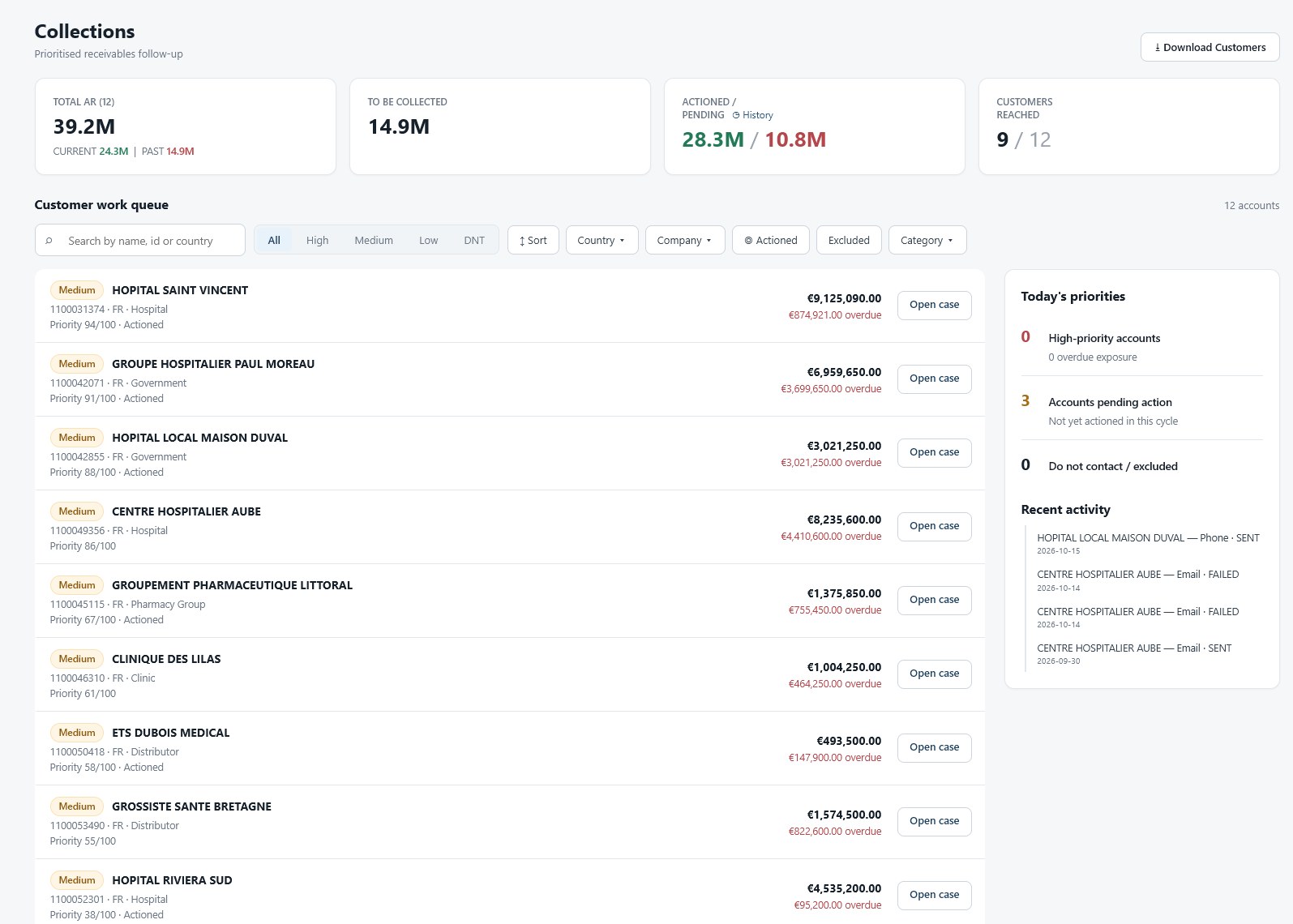
Instead of ageing reports and manual sorting, every account is scored by the collection priority engine and presented in a single queue. Filters, search and export are one click away; a side panel keeps today's priorities visible.
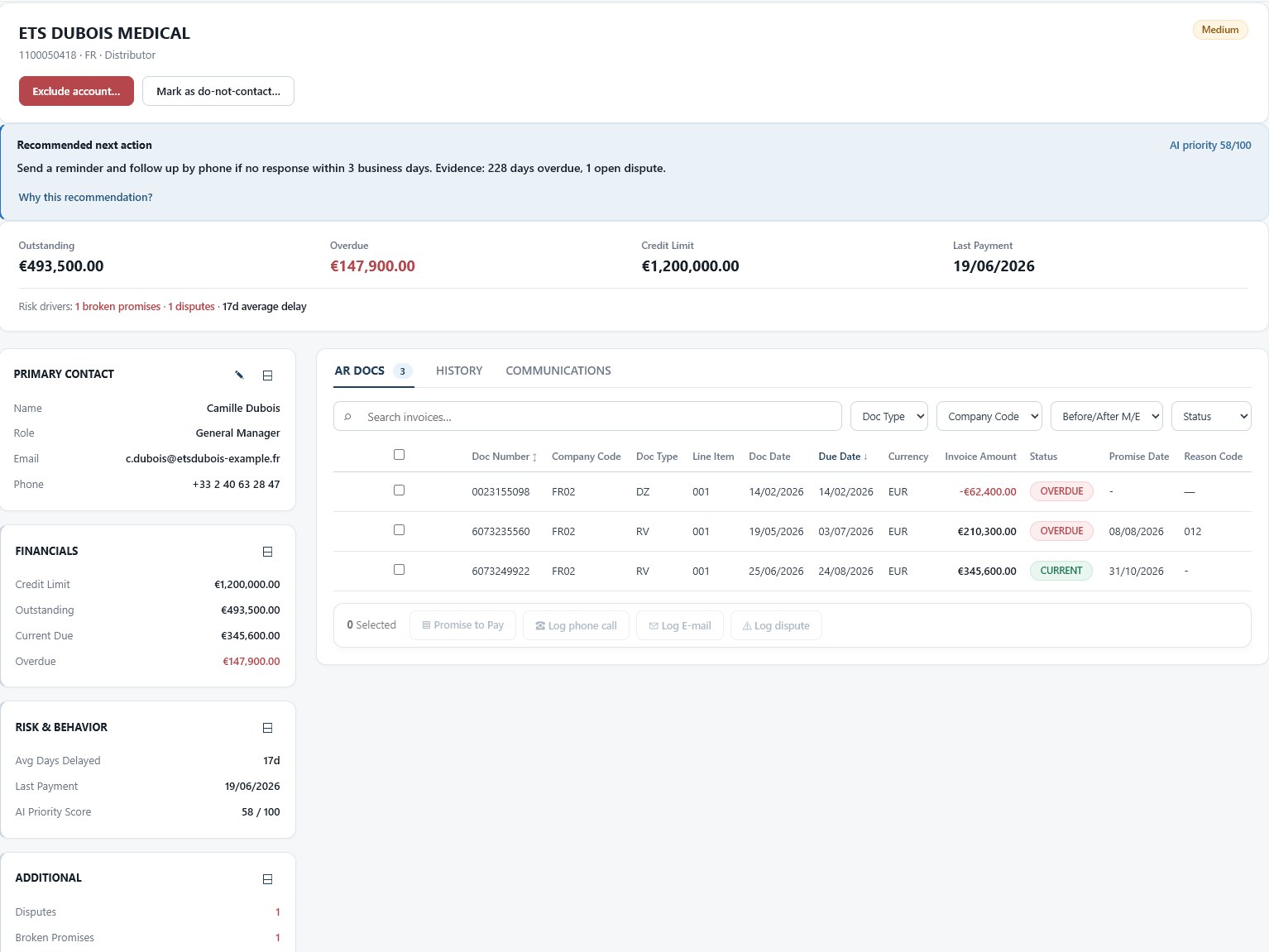
Opening a customer shows the recommended next action first — with its evidence: broken promises, overdue days, disputes, payment history. Financial exposure, credit limit and risk drivers sit right beneath it.
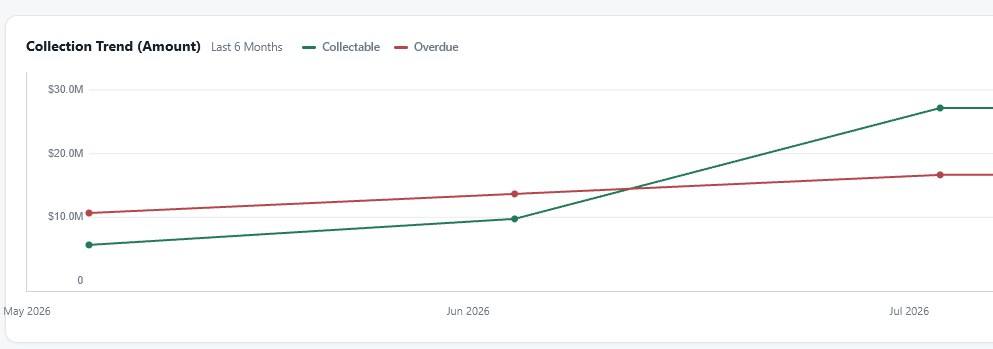
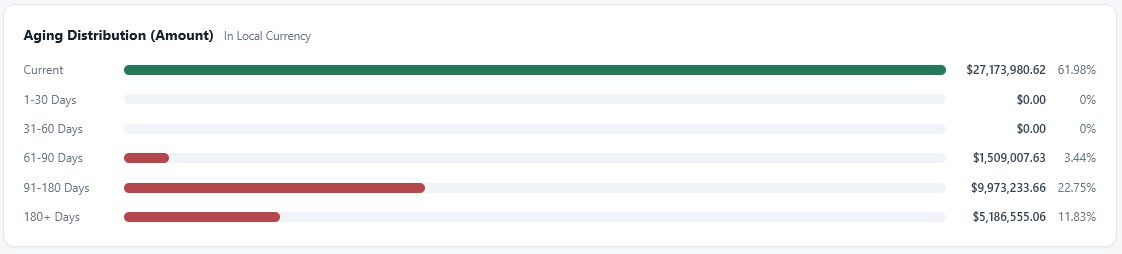
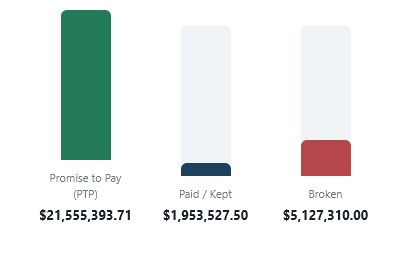
The supervisor dashboard turns the portfolio into decisions: collection trend, strategy mix by exposure, ageing distribution and promise-to-pay outcomes — filterable by collector, country, customer group and company code.
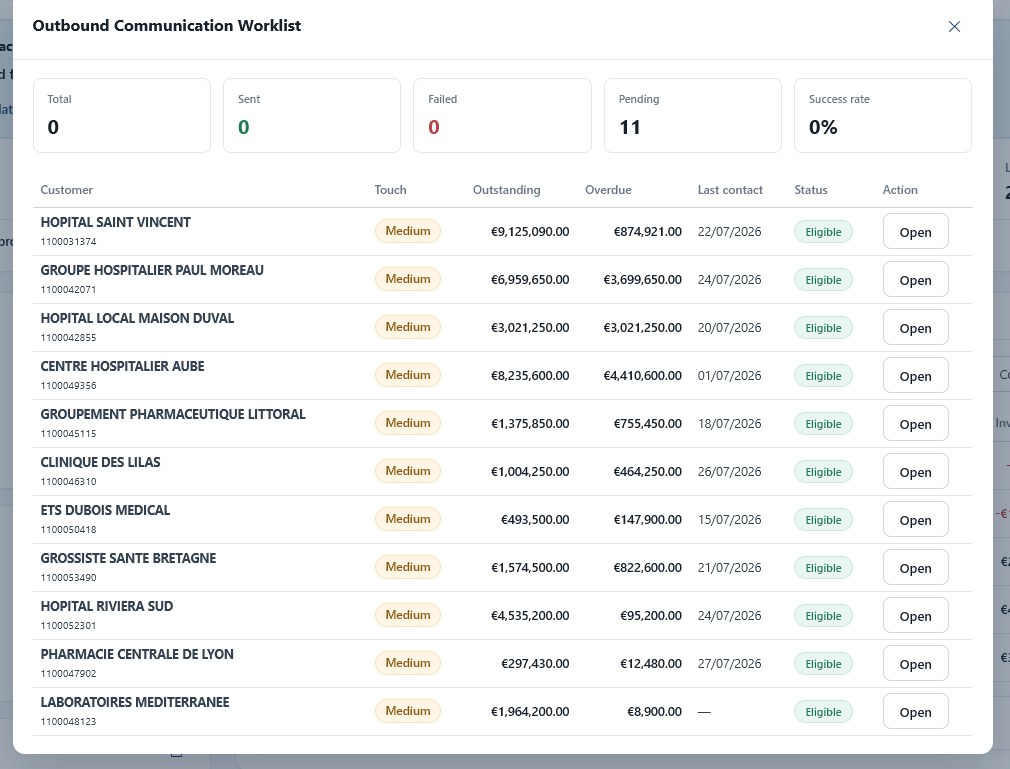
The outbound worklist shows who is eligible for contact and who is suppressed by touch strategy. Reminders are generated from scenario templates in the customer's language and delivered through your own SMTP server.
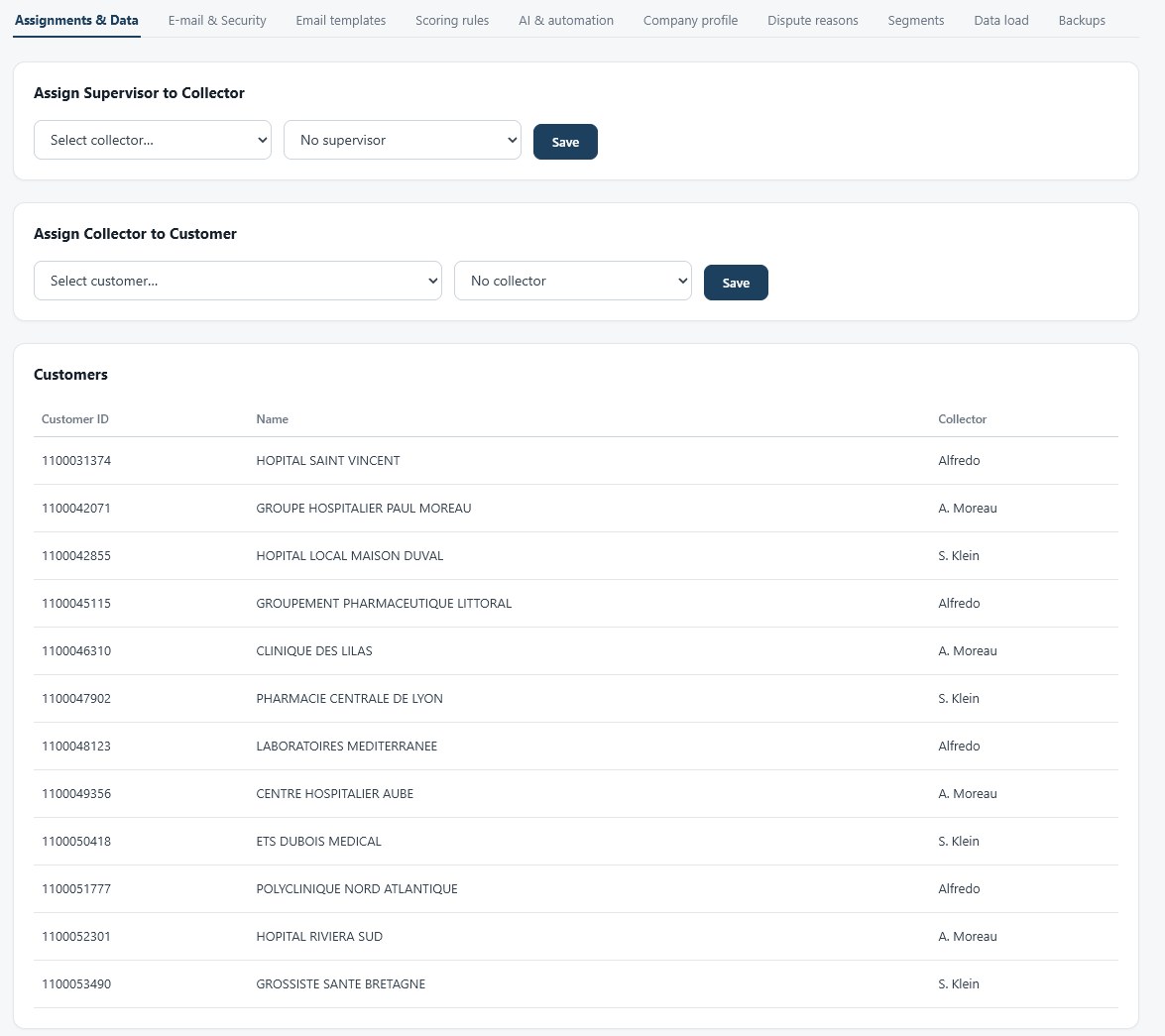
Administrators assign supervisors to collectors and collectors to customers, manage users, and configure e-mail delivery with encrypted credentials. Every administrative change is written to the audit log.
After sign-in, each user lands in the view that matches their role — with server-side enforcement of what they can see and do.
Works an assigned portfolio: queue, customer workspaces, promises, calls, e-mails and reminders — in English or Spanish.
Monitors portfolio performance, reviews collector workload and follows up on broken promises and escalations.
Manages assignments, users, scoring rules, e-mail delivery and the audit trail of every change.
The demo environment runs the exact application shown in the screenshots above — no slides, no mocks.